

Diwali is one of the most eagerly celebrated festivals in Tamil Nadu. The sound of crackers, the fragrance of sweets, the glow of lamps, new clothes, family gatherings, and delicious festive food all make the occasion special. But before many of these celebrations begin, Tamil families traditionally follow an important ritual - the Diwali oil bath.
For generations, sesame oil, also known as gingelly oil or nallennai, has been closely associated with this traditional bath. In many Tamil households, waking up early on Deepavali morning, applying warm sesame oil to the head and body, and taking an oil bath is considered an essential part of the celebration.
This traditional practice is also known as a Gingelly oil bath, because sesame oil is commonly called gingelly oil in South India. The ritual is an important part of the traditional Deepavali oil bath followed by many Tamil families.
But why sesame oil?
Is this simply an old custom passed down through generations, or is there a deeper cultural meaning behind it?
The answer lies in the combination of tradition, family practices, symbolism, and the way Diwali has historically been celebrated in Tamil households.
Let's explore why the sesame oil bath remains such a meaningful part of Tamil Diwali traditions and why Deepavali Ganga Snanam continues to be an important part of the festive morning.
What Is the Diwali Oil Bath Tradition?
The traditional Diwali oil bath, commonly called Ganga Snanam or Deepavali Ganga Snanam in Tamil households, is usually performed early on Diwali morning.
The day often begins before sunrise. Family members traditionally apply sesame oil to their hair and body before taking a bath. In many homes, elders apply the oil to younger members of the family as a gesture of affection and blessing.
This traditional Deepavali oil bath is followed by wearing new clothes and beginning the day's celebrations.
The sequence itself is meaningful:
Oil bath → New clothes → Sweets → Blessings → Celebration
For many Tamil families, this isn't merely a bathing routine. It marks the beginning of Diwali.
It creates a sense of renewal and gives the festival a special rhythm that has been followed across generations.
Why Is Sesame Oil Used for Diwali Oil Bath?
Sesame oil has a particularly important place in traditional Indian practices. In Tamil, it is commonly known as nallennai, meaning "good oil."
Unlike many modern cooking oils, sesame oil has been part of South Indian food traditions and household practices for centuries.
Its use during Diwali is therefore connected to familiarity and tradition.
Sesame seeds have long been valued in Indian culture, and sesame oil became an important household oil because of its versatility. Families used it in cooking, traditional preparations, hair care, massage, and other everyday practices.
Over time, the use of sesame oil for the festive Gingelly oil bath became deeply connected with Diwali in Tamil households.
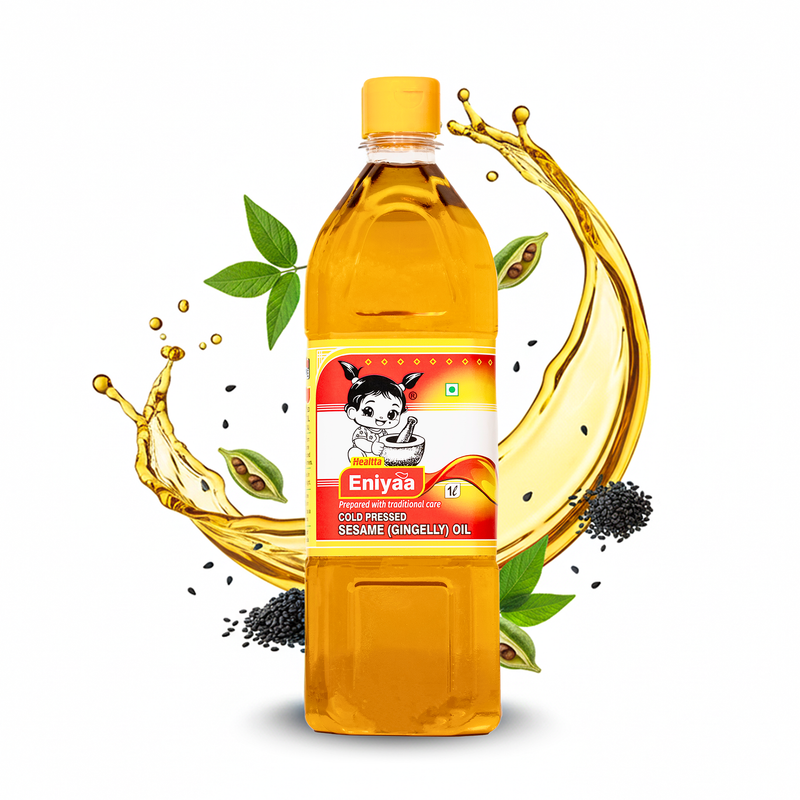
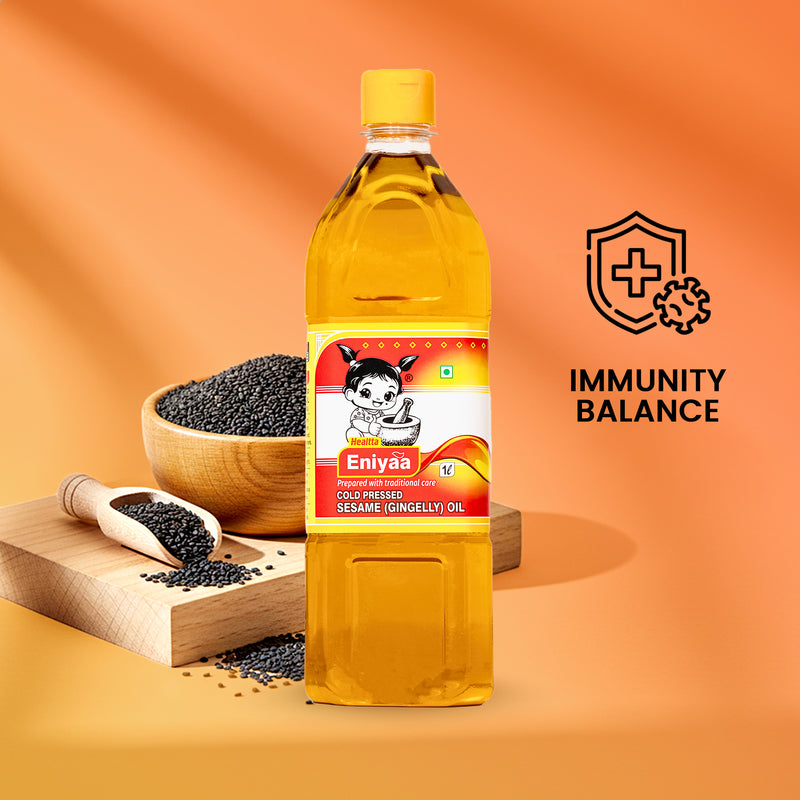
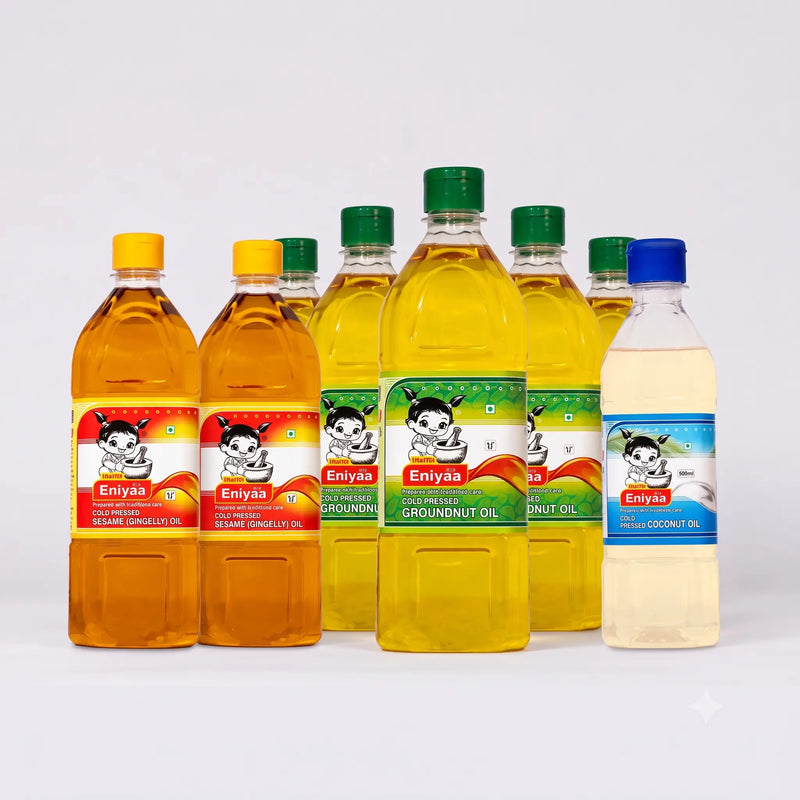
For families who continue this tradition today, a good-quality sesame oil can be a convenient household option for keeping sesame oil available for traditional practices.
The practice also reflects an important traditional idea: festivals should begin with cleansing, preparation, and renewal.
The Cultural Meaning Behind the Oil Bath
One of the most fascinating aspects of the Diwali oil bath is that it represents more than physical cleanliness.
Diwali itself symbolizes the movement from darkness towards light. Lighting lamps, cleaning homes, wearing new clothes, and meeting loved ones are all associated with a sense of fresh beginnings.
The oil bath fits naturally into this idea.
The traditional practice can be understood as a symbolic way of leaving behind the old and beginning the festival with a refreshed body and mind.
For families, it is also an opportunity to pause from everyday routines and participate in something meaningful together.
This is one reason the practice of Deepavali Ganga Snanam has survived even as lifestyles have changed.
Why Do Elders Apply Sesame Oil to Children?
This is one of the most beautiful parts of the Tamil Diwali tradition.
In many families, elders apply sesame oil to the heads and bodies of younger family members before their bath.
It is not simply about applying oil.
It represents care, affection, blessings, and family connection.
Grandparents and parents often pass the tradition to children by physically participating in the ritual. A child may not initially understand its cultural significance, but repeated participation creates a connection with family heritage.
Years later, those children may continue the same tradition with their own families.
That is how cultural practices survive—not only through written instructions but through experiences shared between generations.
The Gingelly oil bath therefore becomes a shared family experience rather than simply a personal bathing routine.
Why Is Diwali Oil Bath Taken Early in the Morning?
Traditionally, Diwali celebrations in Tamil households begin very early.
Families wake before sunrise, complete their Deepavali oil bath, wear new clothes, and then begin the day's festivities.
There is a practical and cultural reason for this timing.
Diwali is considered a special day, so beginning the morning with a traditional bath creates a clear separation between an ordinary day and a festival day.
The early morning ritual also gives families time to complete prayers and other traditions before visiting relatives, preparing festive meals, exchanging sweets, and enjoying the celebrations.
Today, busy schedules may have changed the exact timing for some families, but the idea of beginning Diwali with an oil bath remains important.
For many households, Deepavali Ganga Snanam continues to mark the beginning of the festive morning.
Sesame Oil and Traditional South Indian Culture
The connection between sesame oil and Tamil culture goes far beyond Diwali.
Sesame oil has traditionally been used in South Indian cooking, especially in dishes where its distinctive aroma and flavour are appreciated.
It has also been associated with several traditional household practices.
This long-standing familiarity helps explain why sesame oil became such a natural choice for the Diwali oil bath.
When a particular ingredient becomes part of everyday life, it can also become part of festivals, ceremonies, and family traditions.
Sesame oil is a good example of this cultural connection.
It isn't simply an ingredient found in a bottle. For many Tamil families, its aroma can bring back memories of childhood mornings, grandparents, festive cooking, and Diwali celebrations.
For households that regularly use sesame oil, keeping a bottle of quality sesame oil at home can also fit naturally into the broader tradition of using sesame oil as part of everyday household practices.
Does a Sesame Oil Bath Have Traditional Wellness Significance?
Traditional Indian practices have long associated oil application with body care.
A warm oil massage or abhyanga has historically been used as part of traditional routines for relaxation and personal care. Sesame oil has been one of the commonly used oils in these practices.
However, it is important to distinguish traditional beliefs from modern medical claims.
A Diwali oil bath should primarily be understood as a cultural and traditional practice. While sesame oil is widely valued for its properties and is commonly used in traditional body-care routines, claims about treating or preventing specific diseases should not be made without appropriate scientific evidence.
The real beauty of the tradition is that it brings together personal care, family bonding, cultural identity, and celebration.
Sesame Oil: More Than a Festival Ingredient
For many people, sesame oil is familiar because of its role in cooking.
Its distinctive nutty aroma is particularly associated with several South Indian recipes. It can add a characteristic flavour to traditional foods and is often used in regional cooking.
But during Diwali, sesame oil takes on another role.
It becomes part of a ritual.
This demonstrates how food ingredients can have cultural meanings beyond their nutritional or culinary functions.
An oil that is used in the kitchen throughout the year can become an important part of a festival that is emotionally significant to an entire family.
A bottle of sesame oil may therefore represent more than a kitchen ingredient for families who associate sesame oil with cooking, traditional routines, and festive memories.
The Connection Between Diwali, Food and Sesame Oil
Food is at the heart of almost every Tamil festival, and Diwali is no exception.
Traditional sweets and savouries are prepared in homes, relatives exchange food, and families sit together to enjoy festive meals.
Sesame oil can also appear in traditional cooking, depending on the family's recipes and regional customs.
This creates an interesting connection:
Sesame seeds → Sesame oil → Everyday cooking → Traditional practices → Diwali oil bath
The ingredient therefore exists at several levels of Tamil culture.
It is part of food, household routines, traditional practices, and festive memories.
For many families, the aroma of sesame oil can be closely connected with memories of preparing for Deepavali Ganga Snanam, making sweets, wearing new clothes, and gathering with relatives.
Why Is This Tradition Still Relevant Today?
Modern life has changed considerably.
Many families now live in cities. Work schedules are busier. Nuclear families have become more common, and some traditional practices have become less frequent.
Yet the Deepavali oil bath continues to hold a special place in many Tamil households.
Why?
Because traditions are not preserved only because they are old. They survive when people attach meaning and emotion to them.
A Diwali oil bath can remind someone of their childhood.
It can remind them of their grandmother preparing sesame oil, their parents waking them early, or the excitement of wearing new clothes after the bath.
These memories make the ritual more than a routine.
It becomes part of a family's identity.
How to Follow the Traditional Diwali Oil Bath
Every family may have its own version of the ritual, but a simple traditional routine can include:
1. Wake Up Early
Begin the morning calmly and prepare for the day's celebrations.
2. Warm the Sesame Oil
Traditionally, sesame oil may be gently warmed before application. It should be comfortably warm, not hot.
3. Apply the Oil
The oil can be applied to the scalp and body according to the family's customary practice.
4. Allow Some Time
Traditionally, families allow the oil to remain for a short period before bathing.
5. Take the Bath
Complete the bath using the family's preferred bathing products and traditional practices.
6. Wear New Clothes
After the bath, wear the new clothes traditionally prepared for Diwali.
7. Begin the Celebrations
Families then proceed with prayers, greetings, sweets, food, and other Diwali celebrations.
The exact routine can vary between families and communities, which is part of what makes Indian traditions so diverse.
Whether a family calls it a Gingelly oil bath, Deepavali oil bath, or Deepavali Ganga Snanam, the underlying tradition remains a meaningful part of the festive morning for many Tamil households.
Sesame Oil Bath: A Tradition Passed From Generation to Generation
Perhaps the most important reason for continuing the Diwali oil bath is not the oil itself.
It is the tradition behind it.
Imagine a child experiencing their first Deepavali Ganga Snanam. An elder applies sesame oil, explains why the family follows the custom, and then helps the child get ready for the celebration.
Years later, that child may become a parent and repeat the same ritual.
This simple act creates a bridge between generations.
The ritual becomes a living piece of family history.
Families may choose different types and quantities of sesame oil according to their needs, and having sesame oil readily available at home can be a practical choice for households that want to continue the traditional practice.
And that is why traditions like the Gingelly oil bath remain relevant even in a rapidly changing world.
Common Questions About Diwali Sesame Oil Bath
Why is sesame oil used for Diwali oil bath?
Sesame oil has a long history in Tamil household practices, cooking, and traditional oil applications. Its cultural familiarity has made it an important part of the traditional Diwali oil bath in many Tamil families.
What is the Diwali oil bath called in Tamil tradition?
It is commonly associated with Ganga Snanam, or Deepavali Ganga Snanam, a traditional early-morning bath performed on Diwali.
Can children take a sesame oil bath?
Children can participate in the family tradition, provided the oil and bathing routine are appropriate for them. Families should also consider individual skin sensitivities and avoid excessively hot oil.
Does every Tamil family follow the same Diwali oil bath ritual?
No. Customs can differ between families, communities, and regions. Some families may follow elaborate rituals, while others maintain a simpler version.
Is sesame oil only used during Diwali?
No. Sesame oil has many culinary and traditional household uses throughout the year. Its association with Diwali is one part of its broader place in South Indian culture.
Keeping the Tradition Alive in Modern Times
Traditions do not have to remain exactly the same forever.
A modern family may have limited time in the morning. Children may have school or other commitments. Family members may live in different cities or countries.
Still, even a simplified Diwali oil bath can preserve the heart of the tradition.
What matters is understanding why the ritual is meaningful.
Parents can explain the custom to children rather than simply asking them to follow it.
Grandparents can share stories about how Diwali was celebrated when they were young.
Families can prepare traditional foods together.
These small actions can keep cultural heritage alive.
The Deeper Meaning of the Diwali Sesame Oil Bath
At first glance, a sesame oil bath may seem like a simple household practice.
But look closer, and it represents much more.
It represents renewal.
It represents family care.
It represents respect for tradition.
It represents the connection between food, culture, and everyday life.
And most importantly, it represents the passing of memories from one generation to another.
That is why the Diwali oil bath continues to be meaningful for many Tamil families.
The sesame oil itself is important, but the memories and emotions surrounding it are even more valuable.
Conclusion
Diwali is often described as the festival of lights, but in Tamil households, its beauty comes from much more than lamps and celebrations.
The early-morning sesame oil bath is one of the traditions that gives Deepavali its distinctive cultural character.
From grandparents applying oil to grandchildren to families gathering for festive meals, the ritual connects generations through a simple but meaningful practice.
The Gingelly oil bath is not merely a bathing routine—it has become part of the memory of Diwali itself.
As lifestyles change, preserving traditions does not necessarily mean following every detail exactly as previous generations did. It means understanding their meaning and carrying that meaning forward.
So, when you take a Deepavali oil bath this Diwali, remember that you are not simply following an old custom.
You may be continuing a tradition that has connected Tamil families for generations.
And perhaps that is the true significance of Deepavali Ganga Snanam: a simple ritual that turns a festival morning into a moment of family, culture, renewal, and cherished memories.
You too should try this
0 comments